Eight item types
Keep logins next to the secrets that usually end up in chat threads.
- Logins
- Secure notes
- TOTP codes
- API credentials
- SSH keys
- Certificates
- Identities
- Custom items
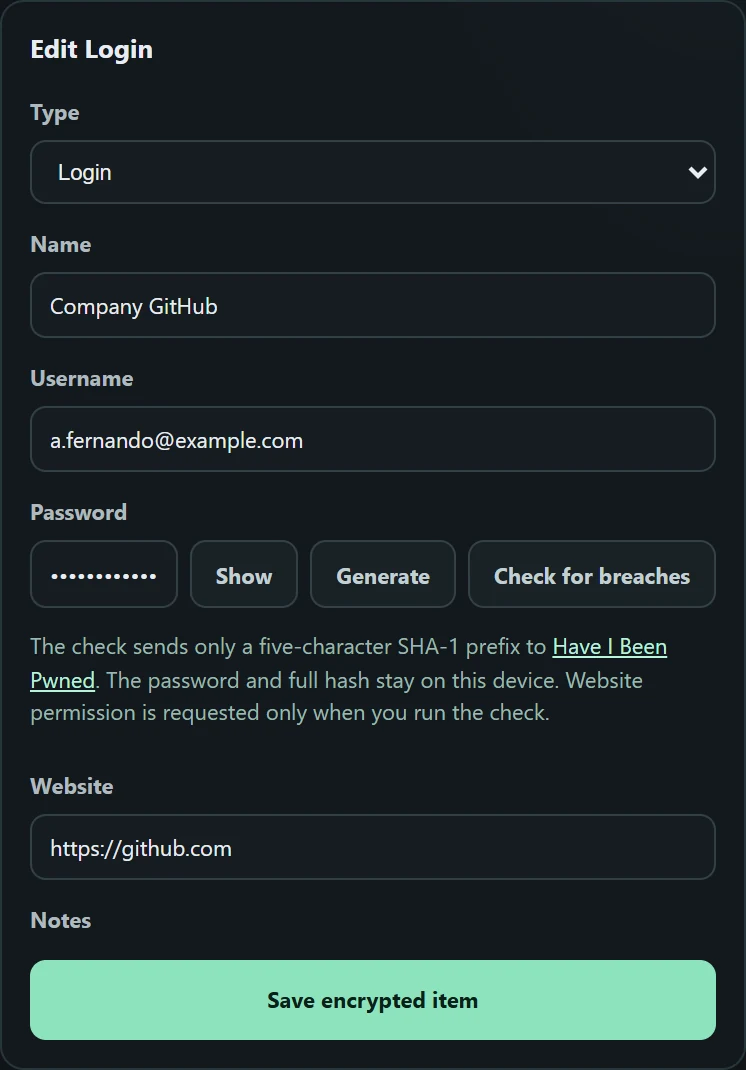
Items are encrypted in your browser before they sync. Your organization sets the policy but does not hold your key.
How it works
The server stores what it cannot read. Your organization manages access without seeing what is inside.
In your browser
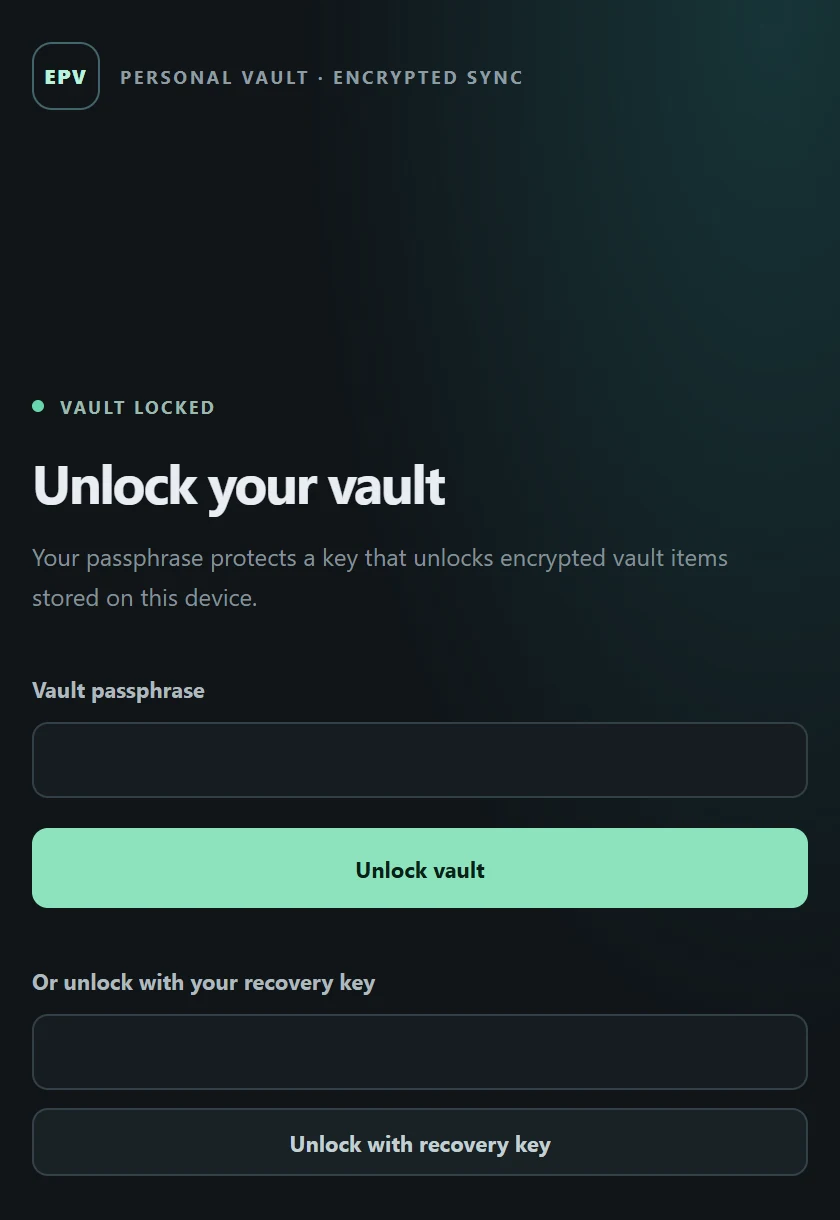
Your passphrase is stretched with Argon2id, and each item is encrypted with AES-GCM before it reaches IndexedDB.
In transit
Sync sends encrypted items and revision numbers over authenticated HTTPS. Sign-in tokens stay in memory.
On the server
The API keeps ciphertext and wrapped key envelopes, separated per organization by PostgreSQL row-level security.
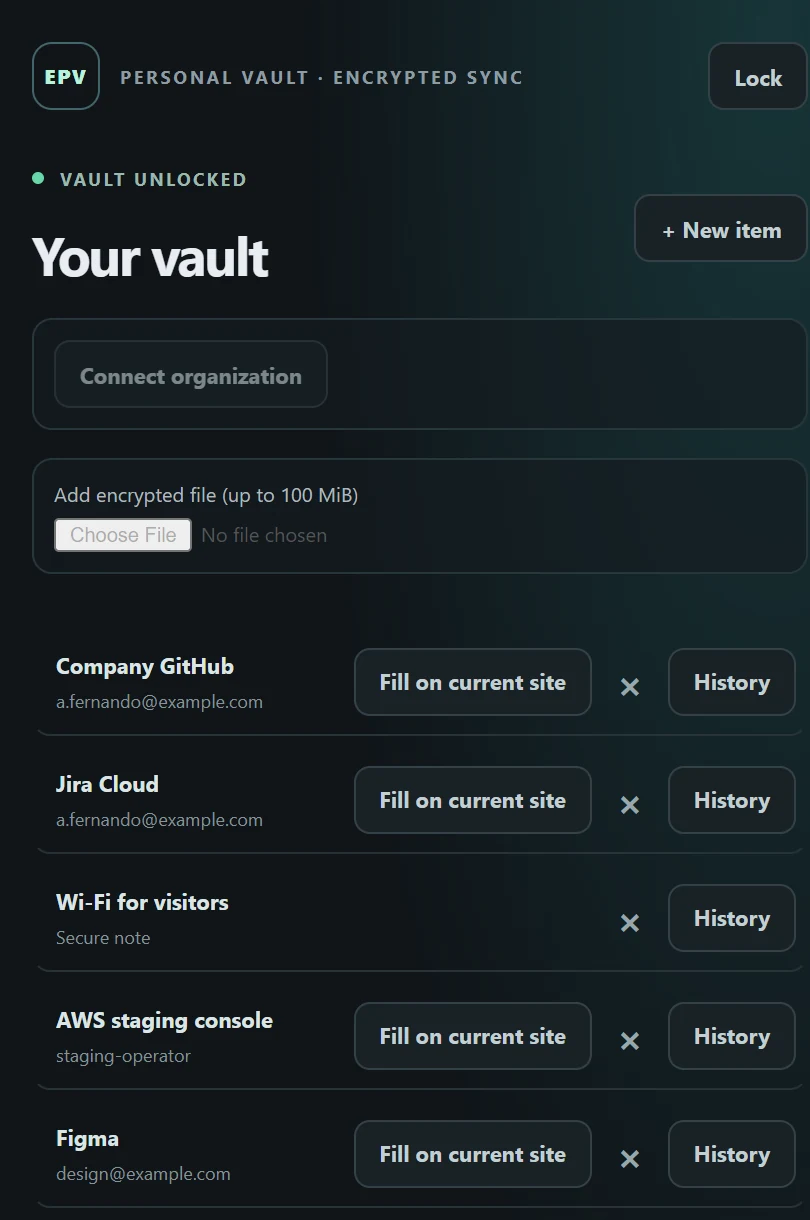
Personal items, shared team vaults and organization policy, all in the extension.
Keep logins next to the secrets that usually end up in chat threads.
Remove a person or group and the owner's device re-encrypts the vault under a new key.
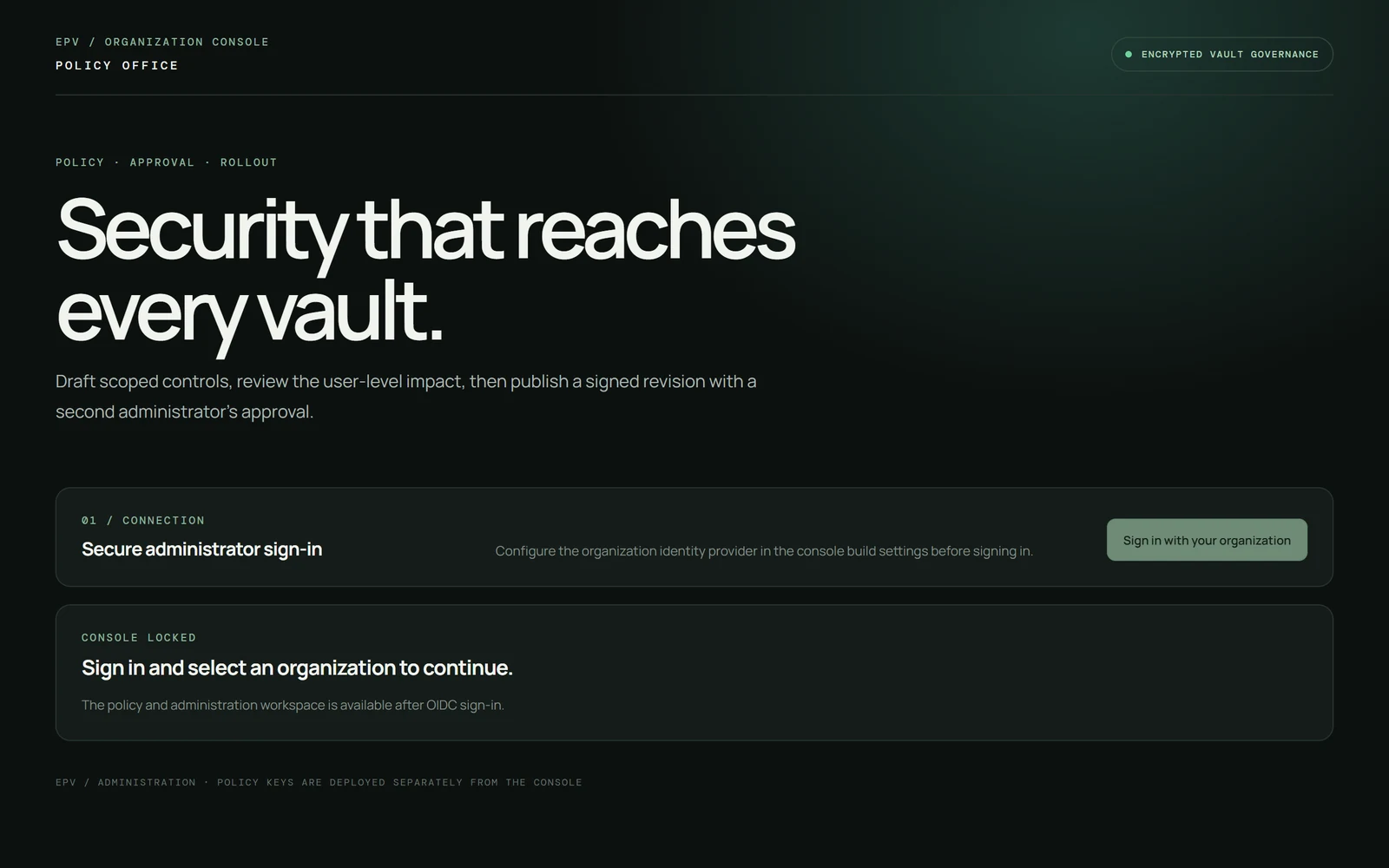
Rules are Ed25519-signed and need a second administrator's approval before they publish.
Suggestions match the exact secure site. You pick Fill, and EPV never submits the form.
Only a five-character SHA-1 prefix goes to Have I Been Pwned. The password stays on your device.
Restore your vault on a new browser with a one-time recovery code. It is shown once and never sent to the server.
The organization console manages people and policy. Vault items stay encrypted, so running EPV never means reading them.
Project status
EPV is in active development and is not production-ready. It has not yet had an independent cryptographic review or penetration test.
Do not store production credentials in EPV until these checks are complete.